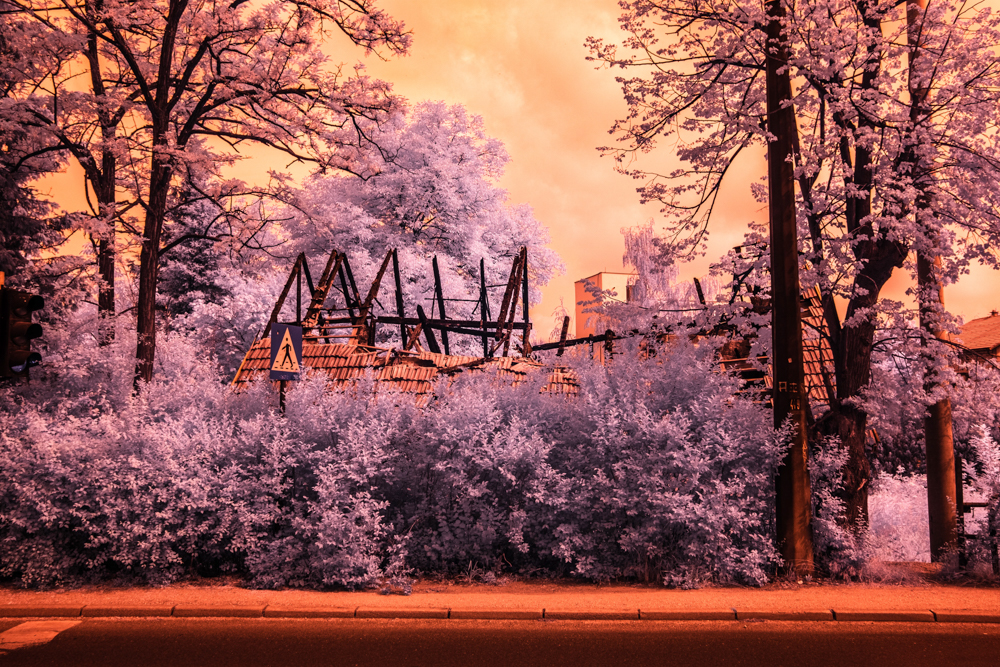
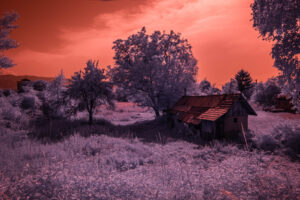
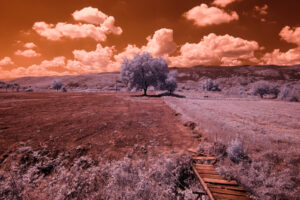
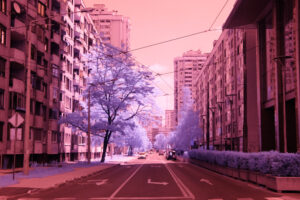
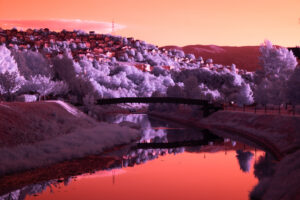
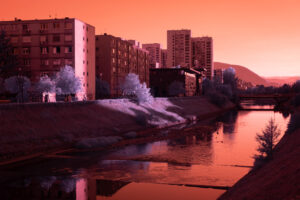
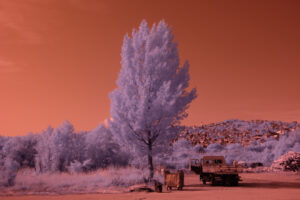
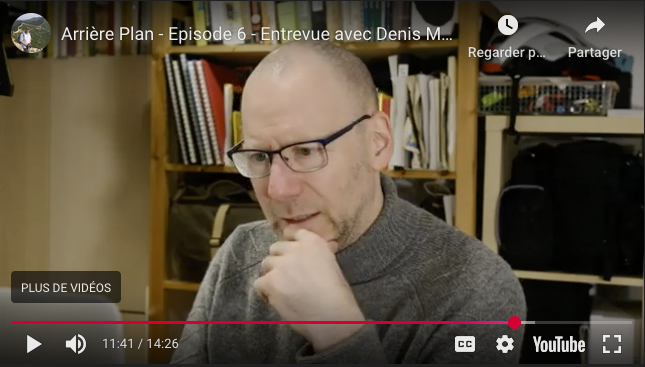
During the summer of 2022, Denis McCready explored photographing Sarajevo using a digital infrared camera focusing on the extensive reforestation the city had undergone since the end of the war. He soon realized there was another reality hidden from the naked eye, discovering another Sarajevo, strangely beautiful, somewhat mysterious, and ethereal.
With Goran Vrhunc, a writer friend, they created this project where twelve writers are asked to explore these pictures with a simple question: What would ANOTHER SARAJEVO be like?
The project will showcase 12 pictures and texts, and will be completed by early September 2024. We are looking for a gallery for an exhibit in Sarajevo between 15 September and 1st November. The project also lends itself to be published as a book.
Tokom ljeta 2022., Denis McCready je istraživao fotografisanje Sarajeva digitalnom infracrvenom kamerom fokusirajući se na opsežno pošumljavanje koje je grad prošao od kraja rata. Ubrzo je shvatio da postoji još jedna stvarnost skrivena golim okom, otkrivši još jedno Sarajevo, neobično lijepo, pomalo misteriozno i eterično.
Sa Goranom Vrhuncem, prijateljem piscem, kreirali su ovaj projekat u kojem se od dvanaest pisaca traži da istraže ove slike uz jednostavno pitanje: Kako bi bilo DRUGO SARAJEVO?
Projekat će prikazati 12 slika i tekstova, a bit će završen početkom septembra 2024. Tražimo galeriju za izložbu u Sarajevu od 15. septembra do 1. novembra. Projekat je takođe pogodan za objavljivanje kao knjiga.
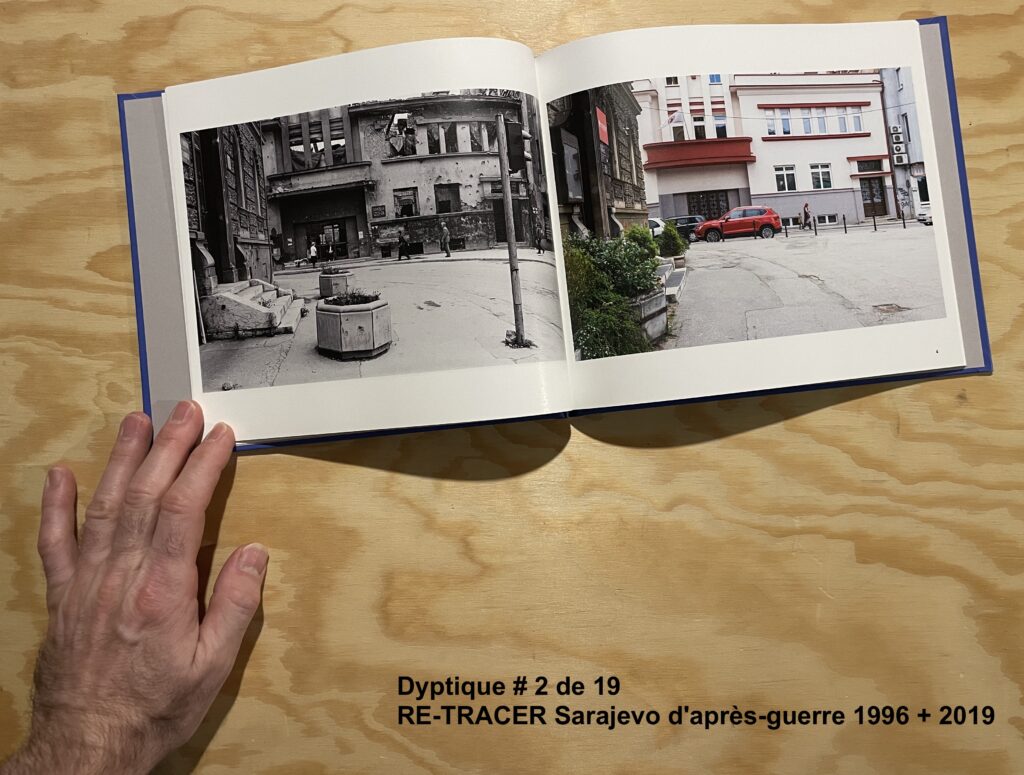
Catalogue de l’exposition RE-TRACER Sarajevo d’après-guerre 1996 + 2019
50 pages, couverture rigide, par Denis McCready
Combien de temps faut-il pour que les traces de la guerre disparaissent? Denis McCready a photographié Sarajevo d’après-guerre en 1996. Au milieu des fleurs printanières, des ruines et des cafés nouvellement rouverts, les gens marchaient partout en toute sécurité dans ce qui ressemblait à un état d’être suspendu. Ils avaient arrêté de mourir, mais n’avaient pas recommencé à vivre. – – – – – Catalogue trilingue – anglais, français, bosnien – contenant 19 diptyques.
Couverture rigide, 10 × 8 po, 25 × 20 cm, 50 pages, papier mat Premium.
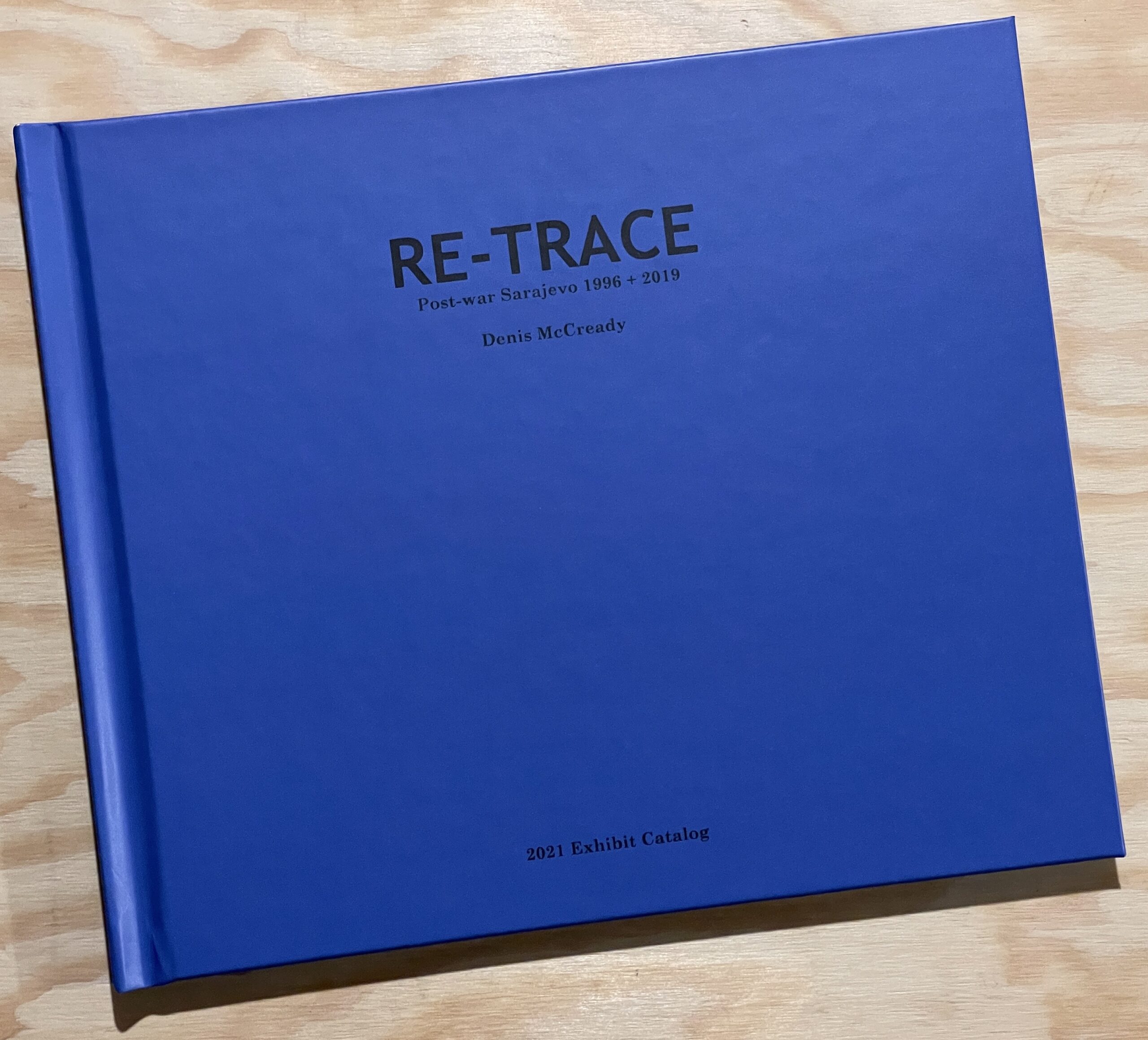
Exhibit catalog of RE-TRACE Post-war Sarajevo 1996 + 2019
50-page Hard Cover, by Denis McCready
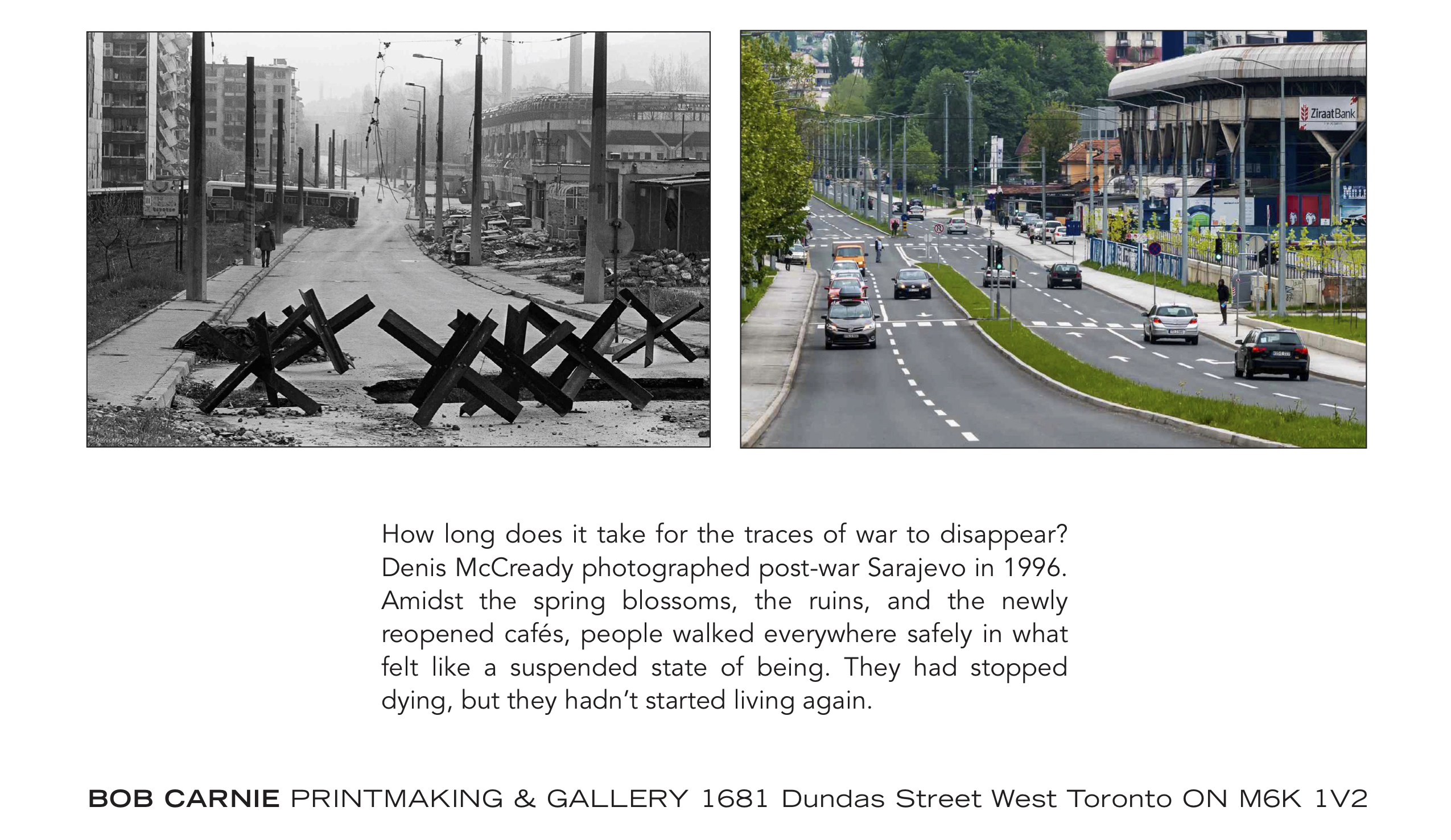
How long does it take for the traces of war to disappear? Denis McCready photographed post-war Sarajevo in 1996. Amidst the spring blossoms, the ruins, and the newly reopened cafés, people walked everywhere safely in what felt like a suspended state of being. They had stopped dying, but they hadn’t started living again. – – – – – Trilingual catalog – English, French, Bosnian – containing 19 diptychs.
Hard cover, 10×8 in, 25×20 cm, 50 pages, Premium Matte paper.
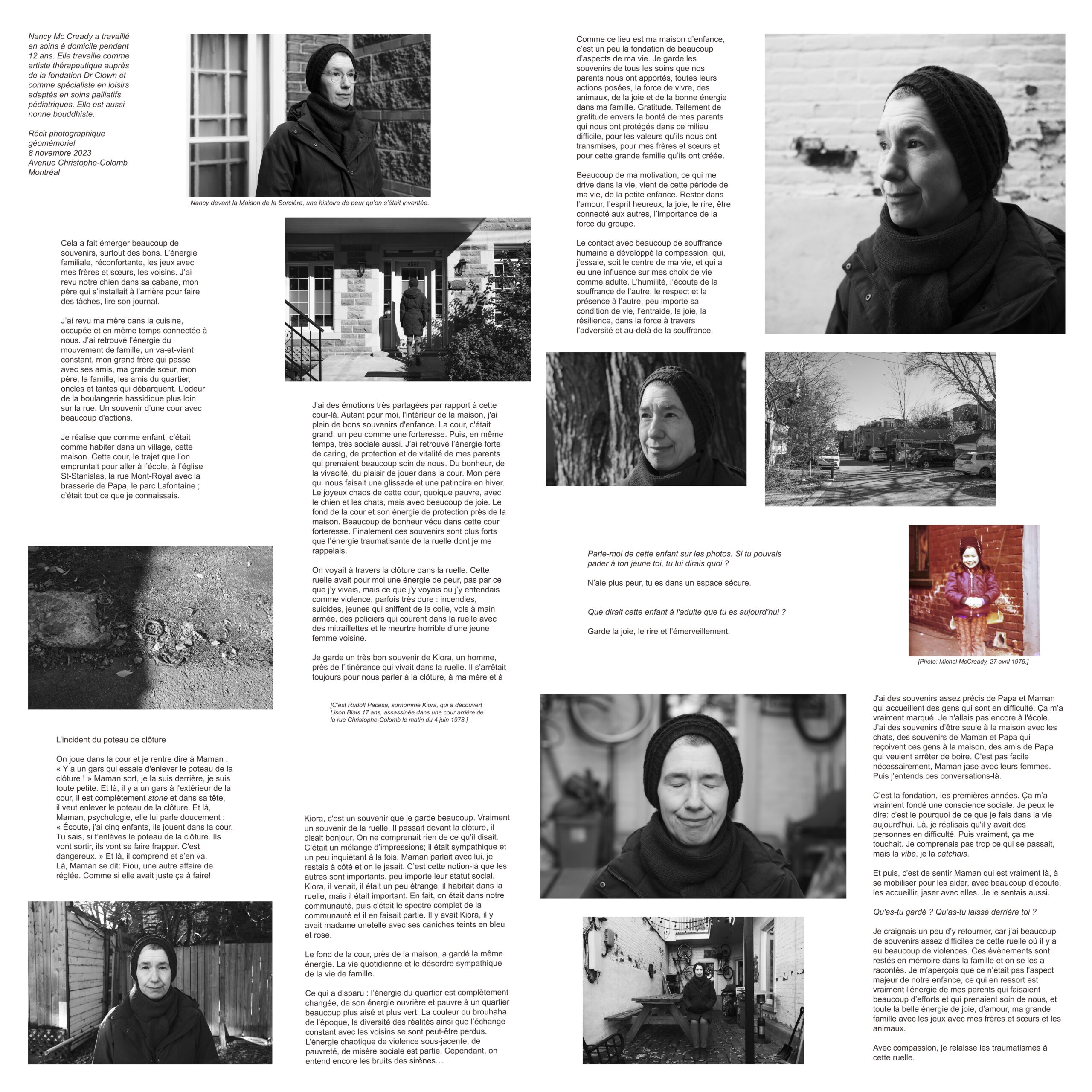
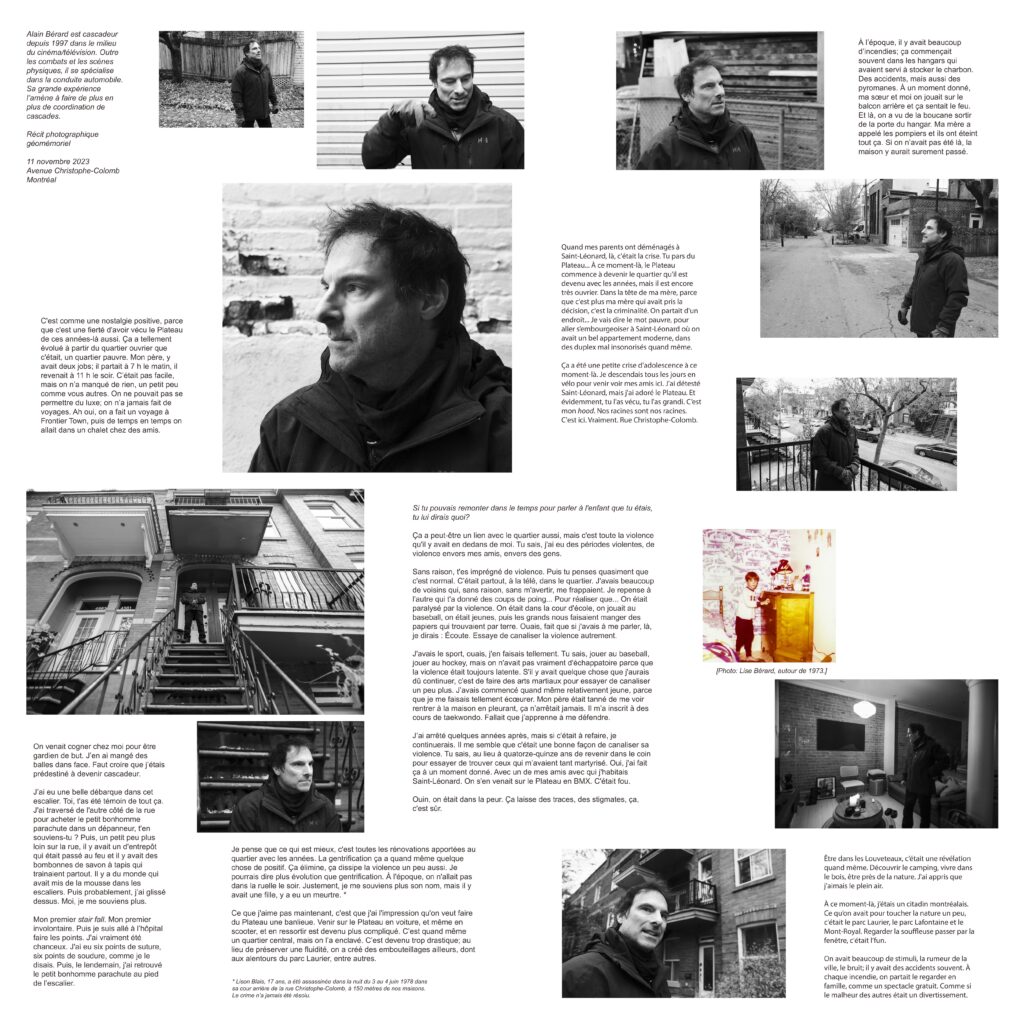
Portraits géomémoriels 1 et 2, photographie, postproduction et impression numérique sur papier mat, 1m. x 1m.
Dans ce dyptique, Denis McCready explore le rapport affectif et mémoriel avec un lieu significatif à travers une séance de photographie sur les lieux de l’enfance. Sa soeur Nancy s’est rendue dans cette cour arrière, lieux de tous les jeux, et a répondu à ses questions après la séance de portrait. Son meilleur ami d’enfance Alain s’est rendu dans cette même cour arrière et a répondu à ses questions pendant la séance de photo.
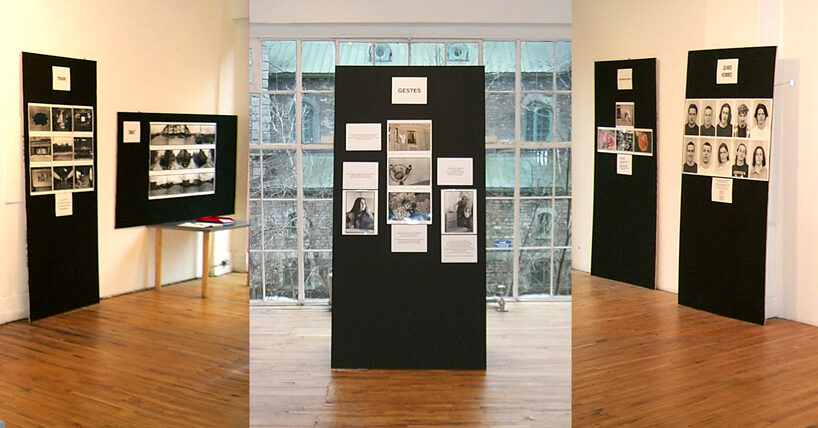
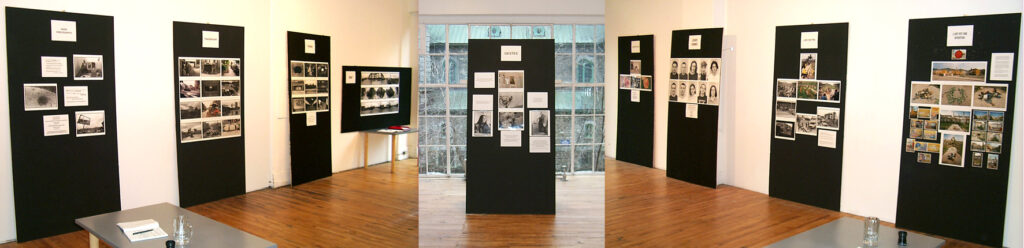
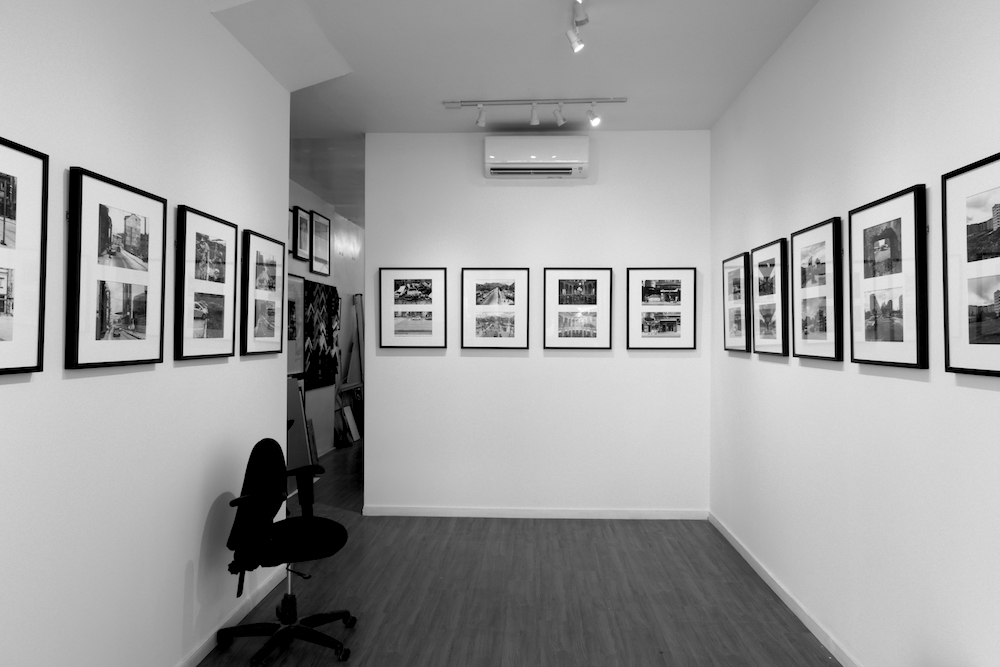
This exhibit was held at Bob Carnie Printmaking & Gallery from March 13th to May 13th 2021, in Toronto (Canada).
Part of the ScotiaBank Contact Photography Festival 2021.
See all the pictures of my photo exhibit RE-TRACE Post-war Sarajevo 1996 + 2019 on Flickr, with all the texts in three languages – English, Bosnian and French.
RE-TRACE – Post-war Sarajevo 1996 + 2019 – A photo exhibit by Denis McCready
I photographed post-war Sarajevo in April – May 1996, merely weeks after the reintegration of the city. I visited it again in 1997, 2006, and 2009, each time documenting the gradual rebuilding and the slowly vanishing traces of war. I visited again in the spring of 2019 to capture 200 locations I had photographed in 1996. This exhibit is the first selection of these 1996/2019 duos.
These images carry a deep sense of loss, the explicit and implicit. Back then, I was an accidental guest among the people of Sarajevo, documenting the ruins of their city, which was the theatre of their daily lives.
In 2019, the traces I was recapturing were the obvious result of two events acting upon each other through time. Someone had built a house, someone else had destroyed it, then the house got rebuilt. Because one doesn’t know when the previous event happened, or when the next will come, the city exists in a post-trauma state of potentiality.
In the spring of 1996, amidst the spring blossoms and newly reopened cafés, people walked everywhere, safely, in what felt like a suspended state of being. They had stopped dying, but they hadn’t started living again.
In May 2019, Sarajevo was a changed city, full of life. I would sometimes catch a ghostly silhouette on a façade or come face to face with a carcass in the middle of downtown, as if people had stopped noticing it was there and didn’t care anymore, but naturally after every destruction comes rebirth; people have moved on with their lives. Some buildings had been rebuilt exactly as they were, almost out of spite, new ones had emerged, like mushrooms of glass and steel. I felt the layers upon layers of a culture’s process of recovery, between the persistence of memory and its erasure.
Every time I go back, I keep asking myself this question: How long does it take for the traces of war to disappear?
========================
BOSANSKI
TRAGOVI VREMENA – Poslijeratno Sarajevo 1996 + 2019 – Izložba fotografija Denisa McCreadyja
Fotografisao sam poslijeratno Sarajevo u periodu između aprila i maja 1996. godine, samo nekoliko sedmica nakon reintegracije grada. Vraćao sam se u Sarajevo 1997., 2006. i 2009. godine, svaki put dokumentujući postepenu obnovu i polako nestajuće tragove rata. Ponovo sam posjetio Sarajevo u proljeće 2019. godine kako bih snimio 200 lokacija koje sam fotografisao 1996. Ova izložba je prvi izbor uporednih fotografija iz perioda 1996/2019.
Ove slike nose dubok osjećaj gubitka, eksplicitnog i implicitnog. Tada sam bio slučajni gost među stanovnicima Sarajeva, dokumentujući ruševine njihovog grada, koji je bio pozorište njihovog svakodnevnog života.
Tragove koje sam ponovo bilježio 2019. bili su očigledan rezultat dva događaja koja su vremenom djelovala jedan na drugog. Neko je sagradio kuću, neko drugi je uništio, a zatim je kuća obnovljena. Budući da ne znamo kada se dogodio prethodni događaj, niti kada će doći sljedeći, grad postoji u posttraumatskom stanju potencijalnosti.
U proljeće 1996., usred proljećnog behara i novootvorenih kafića, ljudi su hodali svuda, sigurno, u nečemu što je izgledalo kao suspendovano stanje postojanja. Prestali su umirati, ali nisu ponovo počeli živjeti.
U maju 2019. godine Sarajevo je bilo promijenjen grad, pun života. Ponekad bih ulovio sablasnu siluetu na fasadi ili se našao licem u lice s lešom usred centra grada, kao da su ljudi prestali primjećivati da je tu i više ih nije bilo briga, ali prirodno nakon svakog uništenja dolazi preporod, ljudi su krenuli dalje sa svojim životima. Neke su zgrade obnovljene upravo onakve kakve jesu, gotovo iz inata, pojavile su se i nove, poput gljiva od stakla i čelika. Osjećao sam slojeve na slojevima procesa oporavka kulture, između postojanja sjećanja i njegovog brisanja.
Svaki put kad se vratim, neprestano se pitam: Koliko treba vremena da tragovi rata nestanu?
========================
FRANÇAIS
RE-TRACER – Sarajevo d’après-guerre 1996 + 2019 – Une expo photo de Denis McCready
J’ai photographié Sarajevo d’après-guerre en avril-mai 1996, quelques semaines à peine après la réintégration de la ville. Je l’ai visité encore en 1997, 2006 et 2009, documentant à chaque fois la reconstruction progressive et les traces de la guerre qui disparaissent lentement. J’y suis retourné au printemps 2019 pour capturer 200 endroits que j’avais photographiés en 1996. Cette exposition est la première sélection de ces duos 1996/2019.
Ces images sont chargées d’un profond sentiment de perte, explicite et implicite. À l’époque, j’étais un invité accidentel parmi les habitants de Sarajevo, documentant les ruines de leur ville, qui était le théâtre de leur vie quotidienne.
En 2019, les traces que je captais étaient le résultat évident de deux événements agissant l’un sur l’autre à travers le temps. Quelqu’un avait construit une maison, quelqu’un d’autre l’avait détruite, puis la maison a été reconstruite. Parce que l’on ne sait pas quand l’événement précédent s’est produit ni quand le prochain viendra, la ville existe maintenant dans un état post-traumatique de potentialité.
Au printemps 1996, au milieu des fleurs printanières et des cafés nouvellement rouverts, les gens marchaient partout, en sécurité, dans ce qui ressemblait à un état suspendu. Ils avaient arrêté de mourir, mais n’avaient pas recommencé à vivre.
En mai 2019, Sarajevo était une ville changée, pleine de vie. J’attrapais parfois une silhouette fantomatique sur une façade ou je me retrouvais face à face avec une carcasse au milieu du centre-ville, comme si les gens avaient cessé de remarquer qu’elle était là et s’en moquaient, mais naturellement après chaque destruction vient la renaissance; les gens ont continué leur vie. Certains bâtiments avaient été reconstruits exactement comme ils étaient, presque par dépit, de nouveaux avaient émergé, comme des champignons de verre et d’acier. J’ai ressenti couche après couche de ce processus de rétablissement d’une culture, entre la persistance de la mémoire et son effacement.
Chaque fois que j’y retourne, je me pose cette question: combien de temps faut-il pour que les traces de la guerre disparaissent ?