Auteur : Denis

  • McCready Media Arts Inc. created

    McCready Media Arts Inc. created

    This week I incorporated my production company under the name McCready Media Arts Inc. I wasn’t looking to make a bold artistic statement with a cryptic name, I just needed to create a corporate for-profit structure to house all my work and collaborations.

    In addition to my book project – The Longest Spring – Sarajevo 1996 to 2026 currently in development – I’m already developing three collaborations for documentary films. I know I told some people that I no longer produce other filmmakers’ projects, but I should clarify: my interest lies in working with my family and long-time friends.

    FRANÇAIS

    Cette semaine, j’ai créé ma société de production sous le nom de McCready Media Arts Inc. Je ne cherchais pas à faire une déclaration artistique audacieuse avec un nom énigmatique, j’avais simplement besoin de créer une structure commerciale à but lucratif pour héberger l’ensemble de mon travail et de mes collaborations.

    En plus de mon projet de livre – The Longest Spring – Sarajevo 1996 to 2026 actuellement en développement – je travaille déjà sur trois collaborations pour des films documentaires. Je sais que j’ai dit à certaines personnes que je ne produisais plus les projets d’autres cinéastes, mais je dois préciser: mon intérêt est de travailler avec ma famille et mes amis de longue date.

  • The Longest Spring – Sarajevo 1996 to 2026

    The Longest Spring – Sarajevo 1996 to 2026

    Featuring hundreds of images taken by Denis McCready in Sarajevo over 30 years, this book offers a reflexive testimony about the lingering aftermath of the war in Bosnia and Herzegovina. With a mix of critical inquiry and personal accounts, the book explores and interrogates narratives of memory and truth, while documenting how trauma lives in infrastructure, gestures, silences, places and non-spaces. This visual exploration of post-war Sarajevo acts as a catalyst to reveal untold stories latent behind the images. Through chance meetings, everyday chats and formal interviews, Sarajevo residents share their testimonials and enrich the author’s reflections. As a witness, a documentarian and an interpreter, McCready navigates the ethical dimensions of testimony-based post-conflict artistic work. His reflexive practice underlines the tension between the common quest for facts and truths with the process of collecting and shaping personal and collective narratives for posterity.

    This book showcases photographs taken in Sarajevo in 1996, immediately after the war, and then in 2006, 2019, 2022, 2024 and 2026. A second book is planned for the period 2027–2046, to complete a 50-year cycle.

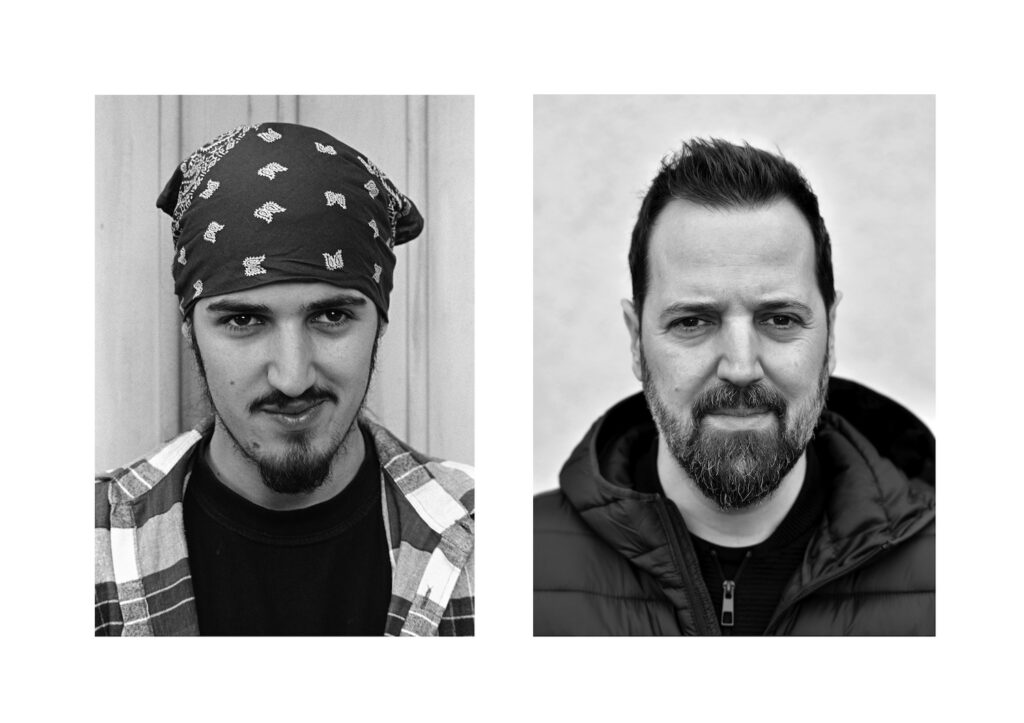
    Mirza in 1996 and 2023

    After speaking this morning with the History Museum of Bosnia and Herzegovina, with whom I will be collaborating again, I can confirm that I will be in Sarajevo in May and June 2026 to interview residents and take their portraits, and to make a photographic inventory of the city on film.

    I am currently looking for a publisher with access to the European market. A crowdfunding campaign will eventually be launched.

    For details, please contact Denis by email at denismccready AT gmail.com.

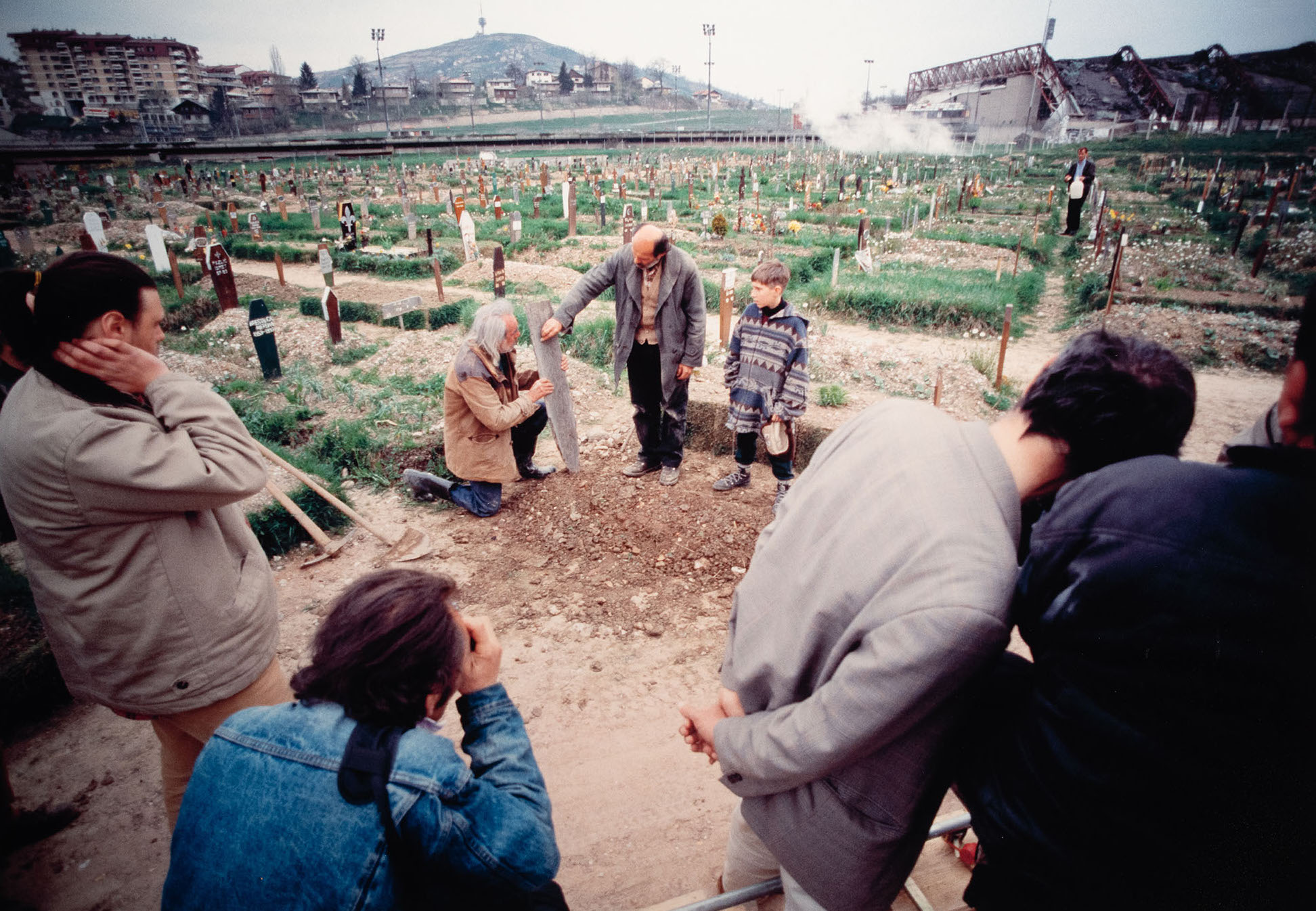
    Top image – Ademir Kenović directing actors on the set of his feature film The Perfect Circle – April 1996.

  • Mylène – La Grande finale

    Mylène – La Grande finale

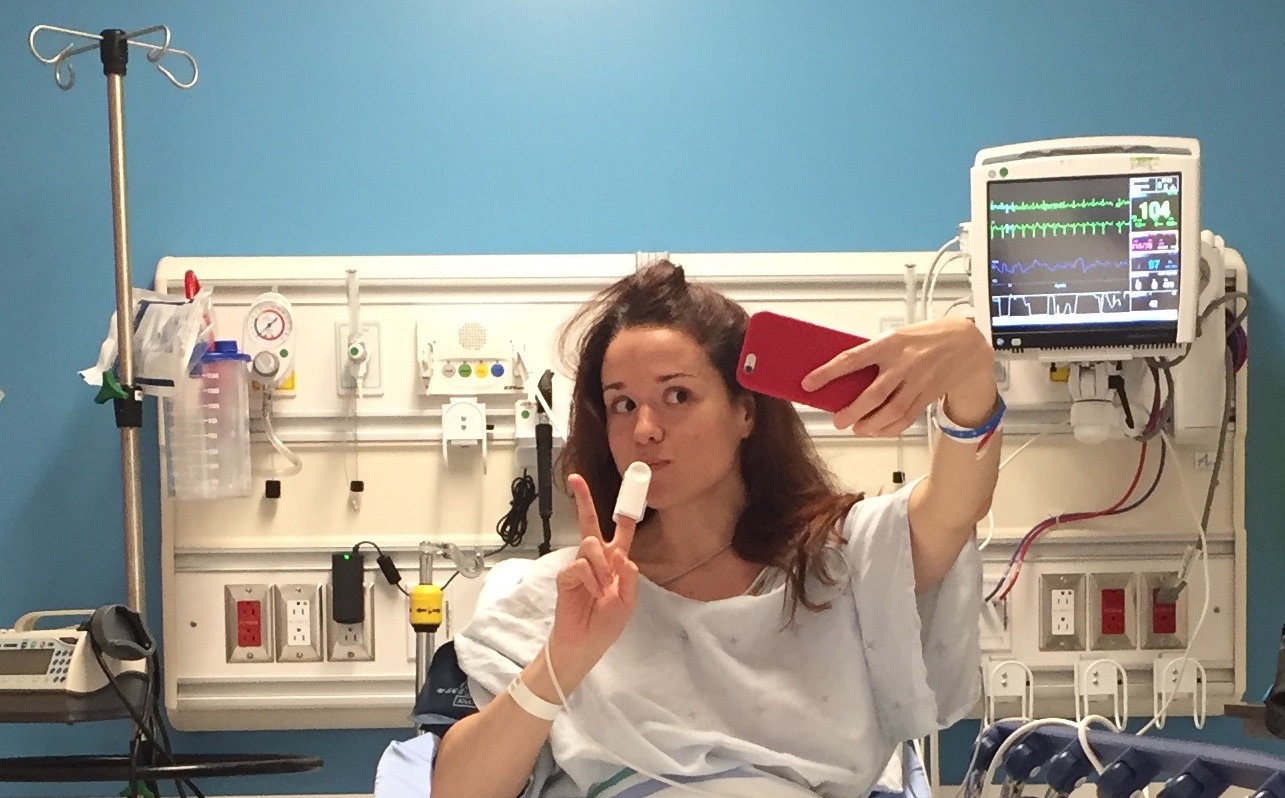
    Mylène – La Grande finale is a feature film documentary about Mylène Taillon Viger’s struggle to obtain proper health care in a system where women experience resistance and neglect (see above picture). What began as a quest to obtain medicaly assisted suicide in Switzerland, after suffering from more than a decade of debilitating chronic pain, turned into a quest for the right to die with dignity after the discovery of an incurable bone cancer. The film is based on 12 hours of video interviews conducted by Denis McCready over the course of 5 years (2016-2020) and features Mylène’s selfportrait photographic archive, her extensive social media activity and her visual art.

    In October 2020, she finaly claimed victory in her fight to get end-of-life treatments with dignity: she was given a date for her medicaly assisted suicide. I was to visit her a few days before, film a final interview and collect her entire digital legacy, but her body couldn’t take it any longer; Mylène passed away naturally just a few days later.

    Status: pre-development

    Directed and produced by Denis McCready

    Top image – Mylène in the emergency ward during one of her numerous visits prior to her cancer diagnosis.

  • Maintenant sur Substack

    Maintenant sur Substack

    Tel que mentionné sur Facebook aujourd’hui.

    Lien Substack: https://substack.com/@denismccready

    Je commence un nouveau chapitre ce matin. J’entame l’écriture d’un livre photographique qui présente l’ensemble de mon travail à Sarajevo depuis bientôt 30 ans.

    Une dimension qui m’habite est de retourner dans mes écrits de l’époque et de faire une relecture/réécriture de ces notes, qui sont à la fois un journal personnel et une compilation d’information récoltée sur le terrain.

    À ce texte s’ajoutera un travail personnel de récit et de réflexion. Éventuellement s’y ajoutera un texte de ma collaboratrice, Silvija Dervišefendić de Sarajevo, qui a contribué à mettre ce projet sur les rails l’automne passé.

    Le troisième élément, et non le moindre, sera les témoignages de résidents de Sarajevo récoltés au cours des voyages précédents et pendant mon projet de recherche pour ma Maîtrise en arts visuels et médiatiques de l’UQAM, auxquels s’ajouteront des conversations-bilans prévues en mai-juin 2026 où nous adopterons une perspective regardant les 30 dernières années passées et imaginant les 20 prochaines.

    Ce livre constitue le volet 1 de 2, puisque je me suis donné comme objectif de continuer de documenter la Sarajevo d’après-guerre jusqu’en 2046.

    Dans ce processus, je vais donc utiliser ma plateforme Facebook pour ce qu’elle fait de mieux – connecter les gens – et y interpeller mes ami·es de Sarajevo et leurs concitoyen·nes.

    Je réserverai mes réflexions artistiques sur mon travail photographique à la plateforme Substack où je consignerai mes réflexions sur la photographie documentaire, le portrait, le paysage, l’architecture, ainsi que mes travaux universitaires et mes projets personnels liés de près ou de loin à la photographie. L’objectif de Substack est d’élargir la portée de mon travail en utilisant ce type de plateforme et j’y écrirai en anglais. Les versions françaises, quand elles existent, seront hébergées sur mon site web (voir premier commentaire).

  • Prvo proljeće – Sarajevo 1996 – First Spring

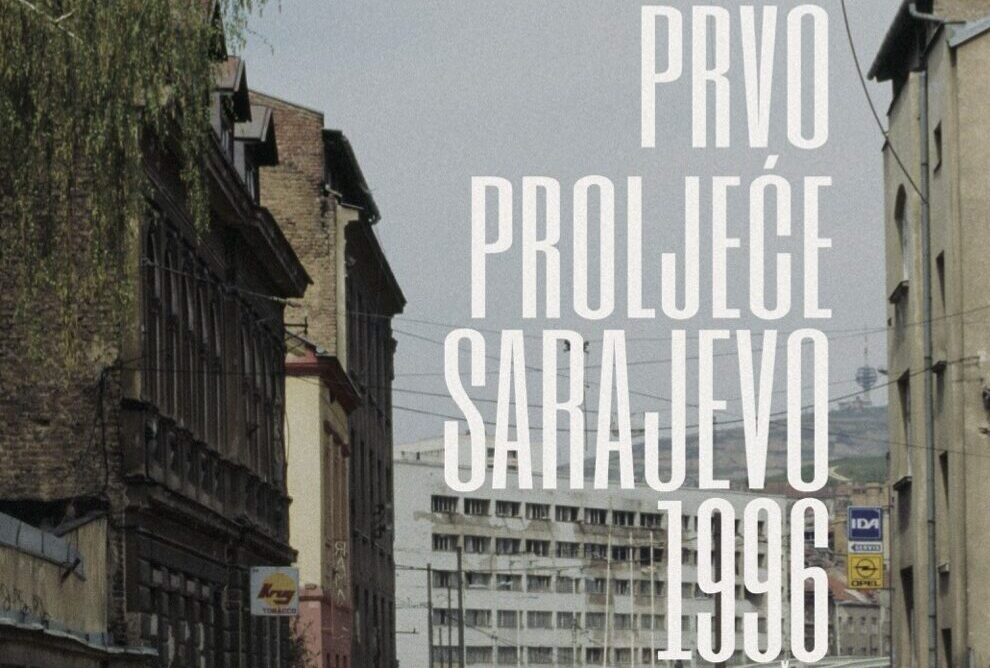
    Prvo proljeće – Sarajevo 1996 – First Spring

    Photographs in search of stories

    In April and May 1996, Canadian photographer Denis McCready documented Sarajevo’s first spring of peace after four years of siege. These photographs had never been presented in Sarajevo. 

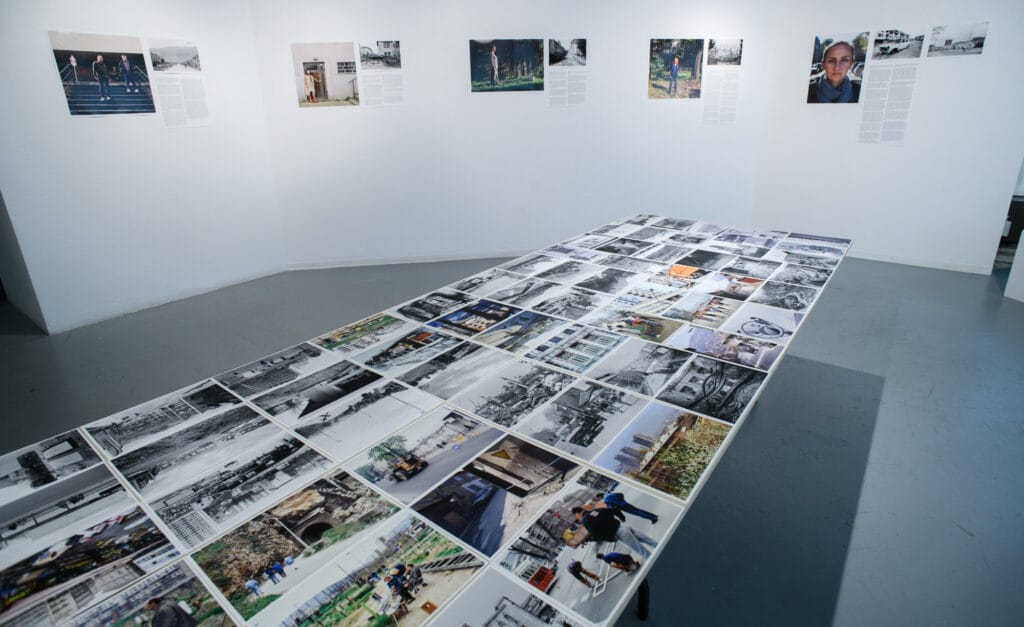
    During the month of October 2024, the History Museum of Bosnia and Herzegovina invited residents of the city to participate in the creation of collective memory by sharing their stories inspired by these images. 

    People were invited to choose an image displayed in the entrance hall and record an audio testimonial in the studio. McCready then chose with them a place in Sarajevo to make their photographic portrait, asking a simple question:

    Where would you like to be remembered? 

    This project was part of McCready’s artistic residency for a master’s degree in Visual and Media Arts from Université du Québec à Montréal (UQÀM). It was produced in collaboration with the History Museum of Bosnia and Herzegovina and supported financially by UQÀM’s Mobility Grant.

    The final master’s exhibition was held in Montreal at CDEx Gallery in June 2025. An expanded version of this project is in preparation for exhibit in Sarajevo in 2026.

  • Résidence artistique à Sarajevo – automne 2024

    Résidence artistique à Sarajevo – automne 2024

    (SEE BELOW for English)

    Pour la création de mon projet de maitrise en arts visuels et médiatiques à l’Université du Québec à Montréal, je me suis rendu à Sarajevo de septembre à novembre 2024 pour une résidence artistique au Musée historique de Bosnie-Herzégovine.

    À Sarajevo, l’absence d’une histoire officielle du siège qui fasse consensus en cette communauté multiculturelle donne un rôle essentiel aux récits personnels pour préserver la mémoire des événements, mais la majorité des survivant-es n’ont comme pratique narrative que la parole. Depuis le printemps 1996, j’y documente les transformations d’après-guerre par la photographie documentaire. Beaucoup de résident-es se sont raconté-es spontanément en regardant mes photographies, me révélant leur potentiel comme catalyseur de souvenirs enfouis. Prises au printemps 1996, ces images me serviront de pont mémoriel pour engager un dialogue avec les survivant-es afin de créer avec elles et eux de nouveaux souvenirs photographiques en ces lieux, cherchant à y dissiper la hantise tenace de la guerre.

    Après avoir présenté aux résident-es mes photographies réalisées à Sarajevo en 1996, j’ai récolté leurs témoignages personnels sur enregistreur audio. Nous avons ensuite développé ensemble les modalités de leur portrait à partir de la question : « Où aimerais-tu qu’on se souvienne de toi ? » Ces portraits contemporains et mes photographies d’après-guerre sont ensuite agencés avec les témoignages imprimés ou audio. Le Musée devient ensuite colégataire de l’intégralité des témoignages et des portraits. 

    J’ai aussi légué au Musée des enregistreurs numériques, des microphones et des appareils photographiques 35mm afin de contribuer à leur capacité de documentation et permettre aussi la création d’ateliers de photographie.

    ENGLISH

    Artistic Residency in Sarajevo – Sept. to Nov. 2024

    For the creation of my master’s project in visual and media arts at the Université du Québec à Montréal, I was in Sarajevo from September to November 2024 for an artistic residency at the Historical Museum of Bosnia-Herzegovina.

    In Sarajevo, the absence of an official history of the siege that creates a consensus in this multicultural community means that personal accounts play an essential role in preserving the memory of events, but the majority of survivors’ only narrative practice is the spoken word. Since the spring of 1996, I’ve been documenting post-war transformations through documentary photography. Many residents have spontaneously recounted their experiences when looking at my photographs, revealing their potential as a catalyst for buried memories. Taken in the spring of 1996, these images will serve as a memorial bridge for me to engage in a dialogue with survivors to create new photographic memories with them in these places, seeking to dispel the nagging haunting of war.

    After presenting residents with my photographs taken in Sarajevo in 1996, I gathered their personal testimonies on audio recorders. Together, we then developed modalities of their portrait, based on the question: “Where would you like to be remembered?” These contemporary portraits and my post-war photographs were then arranged with the printed or audio testimonies. The Historical Museum of Bosnia-Herzegovina became co-owner of all the testimonies and portraits.

    I also bequeathed digital recorders, microphones and 35mm cameras to the Museum, to contribute to their documentation capacity and also enable the creation of photography workshops.

  • Sanctuaire – Vétéran·es canadien·es de l’Afghanistan recherché·es

    Sanctuaire – Vétéran·es canadien·es de l’Afghanistan recherché·es

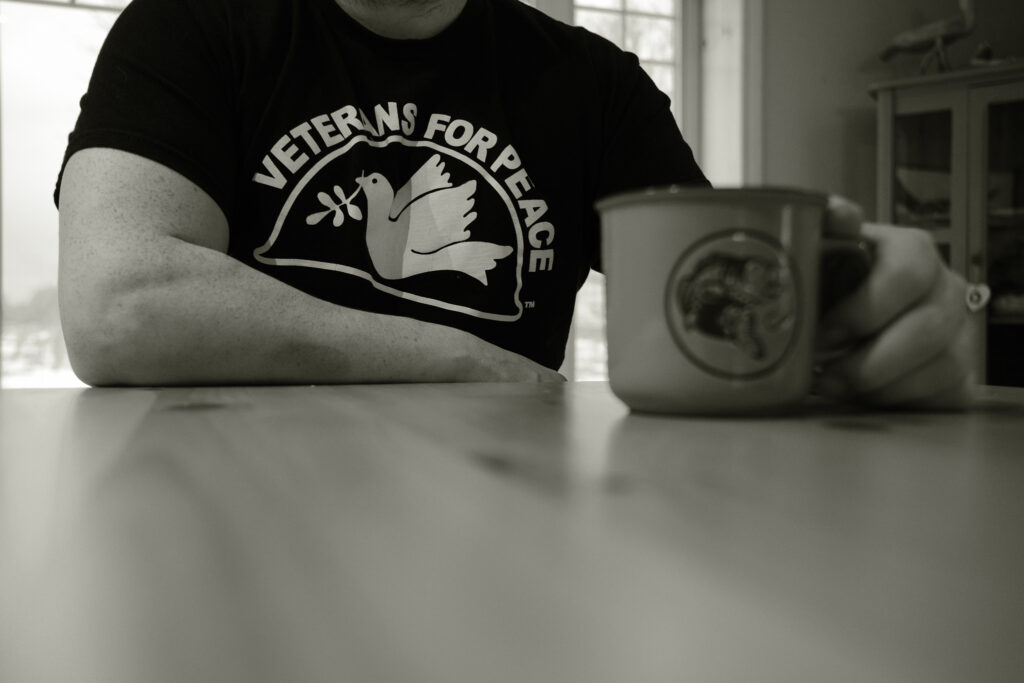
    VÉTÉRAN-ES DE L’AFGHANISTAN RECHERCHÉ-ES POUR UN PROJET D’HISTOIRE ORALE ET DE PHOTOGRAPHIE

    Après quelques séances de photos avec des amis, j’élargis maintenant ma recherche de vétéran-es à mon réseau Facebook/Instagram/Twitter.

    Contact: [email protected]

    Sanctuaire est une série de portraits de vétéran-es canadien-nes de la guerre d’Afghanistan accompagnés d’extraits d’entrevues. J’entreprends ce projet après plusieurs années en cinéma documentaire à explorer l’histoire militaire du Canada et à interviewer des vétérans. Pour l’instant, je me concentre à faire des entrevues avec les vétérans – hommes et femmes – résidant au Québec, avec des séances de portraits dans leur environnement.

    David 2022
    David 2022
    David 2022
    David 2022
    Martin 2022
    Martin 2022
    Martin 2022
    Martin 2022

    Qui je suis

    Je suis un producteur de documentaires et écrivain primé avec plus de 25 ans d’expérience à faire des films. J’ai commencé la photographie au milieu des années 80 et j’ai poursuivi mon travail de portrait et de documentaire en parallèle avec la production de films. Tout au long de ma carrière, j’ai travaillé sur de nombreux projets de films documentaires sur la guerre et les conflits, dont Corée : la guerre inachevée, La Grande Guerre, Sur la corde raide (Prix Gémeaux) en plus de réaliser le court métrage Vimy retrouvé. Avant de quitter l’ONF en 2022, j’ai réalisé une expérience interactive intitulée Vimy – Mémorial vivant – Le pèlerinage numérique. Depuis le printemps 1996, je poursuis un projet photographique de longue haleine sur le Sarajevo d’après-guerre. J’ai également remporté un prix littéraire de CBC/Radio-Canada en 2004 avec une nouvelle sur mon voyage à travers la Bosnie d’après-guerre.

  • Jeudi matin à Trieste – Exposition

    Jeudi matin à Trieste – Exposition

    (English below)

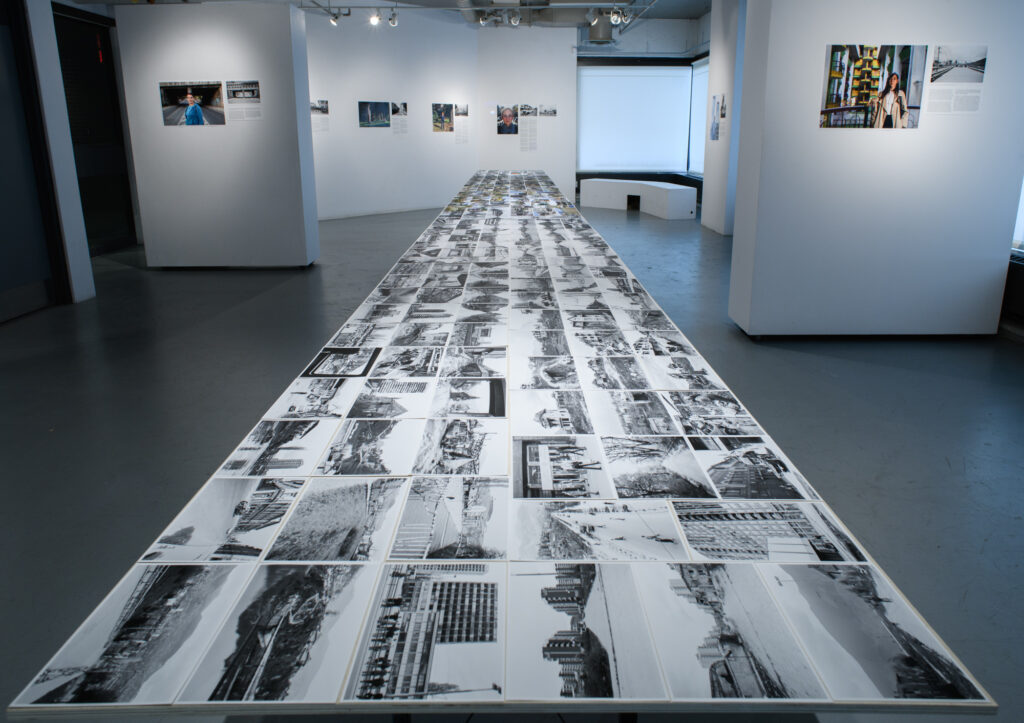
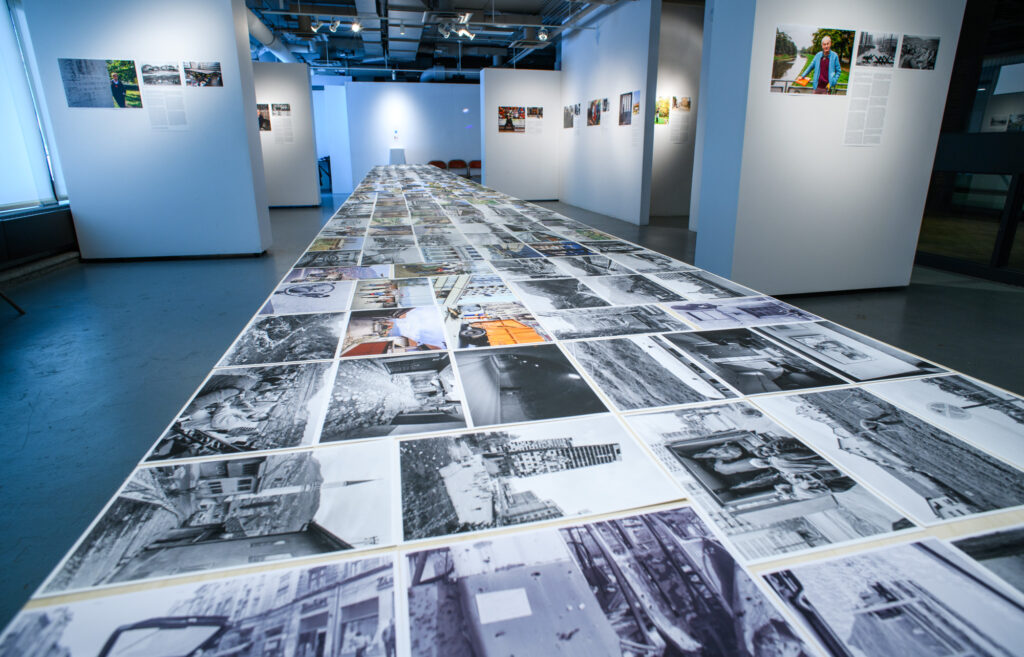
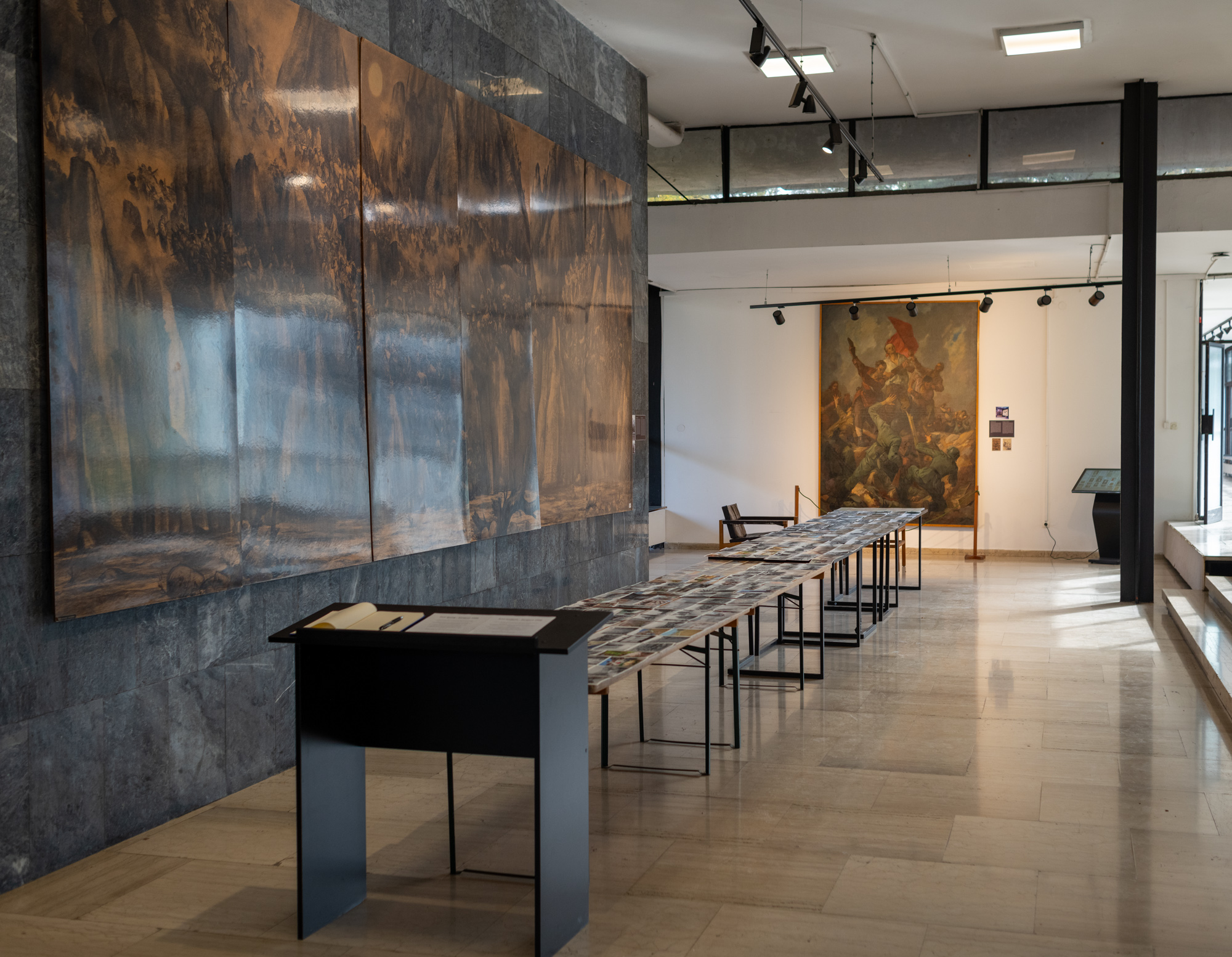
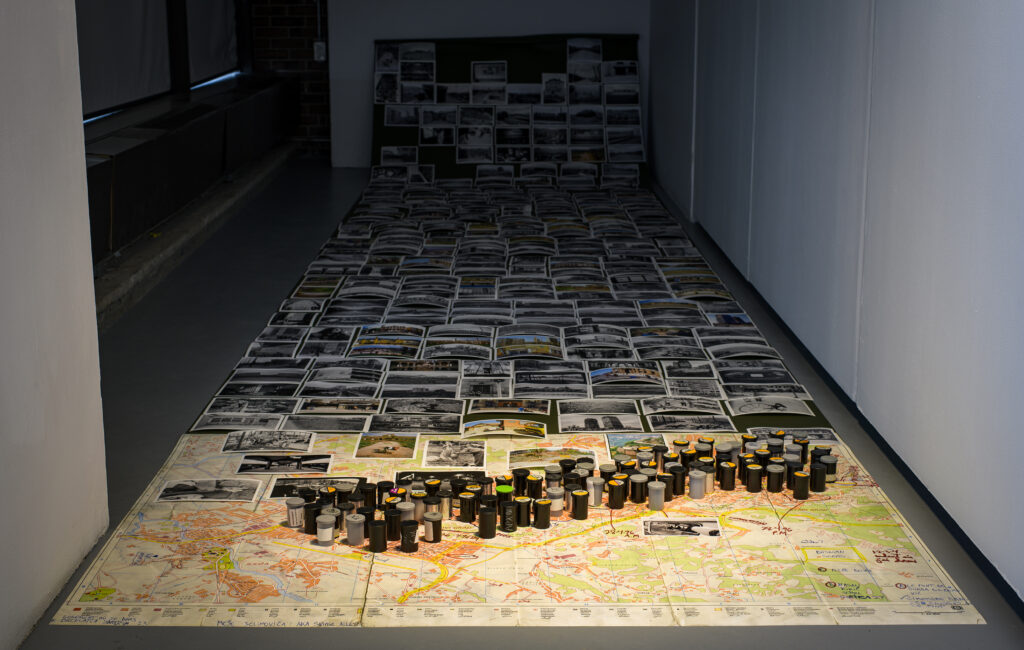
    285 impressions numériques de tailles variées, toile militaire vulcanisée 5 pieds x 20 pieds, 101 rouleaux de films 35mm, papier, encre.

    Œuvre en cours d’évolution constituée de photographies prises en avril et mai 1996 à Sarajevo (Bosnie-Herzégovine), un mois après la réunification de la ville. 

    Remerciements à Pierre Tison et Jean-René Archambault, pour l’aide à la sélection d’images, et Marion Panteghini pour les nombreuses discussions.

    Jeudi matin à Trieste

    9 mai 1996 – Arrivé tôt par l’autobus de nuit en provenance de Split, je suis assis au café de la gare pour réfléchir; j’ai une décision à prendre. Je sors de l’ex-Yougoslavie d’après-guerre avec 100 rouleaux de film exposés et il ne me reste que 25 rouleaux frais. Je sais que ces images sont importantes, mais je ne sais pas par où commencer pour qu’elles soient vues. Plus de 3000 images fantômes latentes sur la pellicule… L’idée de tout me faire voler me donne le vertige.

    Si je continue mon voyage, je dois protéger ces 100 rouleaux, uniques et précieux, jusqu’à mon retour à Montréal. Et puis, je n’ai aucune manière de savoir si Konstantin est toujours vivant. En rentrant maintenant, je sacrifie l’Albanie et des mois de préparation. Ça n’a plus vraiment d’importance parce que j’ai été happé par la Bosnie, par ses gens, et je m’y sens étrangement chez moi. Je sais déjà que je ne m’en remettrai jamais. Je termine mon café pendant que l’ombre du matin s’estompe. Le guichet de la gare vient d’ouvrir. Un avion m’attend à Paris.

    Konstantin

    J’ai choisi ces images parce que tu n’as rien vu à Sarajevo. Tu n’as rien vu de ce que j’ai vu à Sarajevo. Diagnostiqué d’un cancer à 30 ans, ta mortalité soudaine a exposé la nôtre (pourtant évidente) d’une manière difficile à ignorer. Et moi j’ai décidé d’arrêter d’en parler; je suis parti sans date de retour, avec l’idée de traverser les Balkans nouvellement en paix pour atteindre l’Albanie. Mais j’ai été arrêté en chemin par Sarajevo que j’avais tant vu aux nouvelles, impuissant et affecté. J’y suis resté 20 jours. À mon retour, le 12 mai 1996, notre ami Jean-René m’a dit que tu n’étais plus vraiment là; tu achevais la phase terminale de ce cancer qui t’avait cloué au lit depuis l’été précédent. Tu es décédé quelques jours plus tard, le jour même où j’ai développé le premier rouleau de film. Cette installation, c’est pour m’imaginer un instant ce dont on aurait parlé entre photographes, si on avait eu le temps.

    ENGLISH

    Thursday morning in Trieste

    285 digital prints of various sizes, 5′ x 20′ vulcanized military canvas, 101 rolls of 35mm film, paper, ink.

    Work in progress, consisting of photographs taken in April and May 1996 in Sarajevo (Bosnia-Herzegovina), one month after the city’s reunification.

    Thanks to Pierre Tison and Jean-René Archambault, for their help in selecting the images, and Marion Panteghini for the many discussions.

    Thursday Morning in Trieste

    9 May 1996 – Arriving early on the night bus from Split, I sit in the station café to think; I have a decision to make. I’ve just left the post-war former Yugoslavia with 100 rolls of exposed film and only 25 fresh rolls left. I know these images are important, but I don’t know where to start to get them seen. There are more than 3,000 latent ghost images on the film… The idea of having everything stolen from me makes me dizzy.

    If I continue my journey, I must protect these 100 rolls, unique and precious, until I get back to Montreal. Besides, I have no way of knowing whether Konstantin is still alive. By going back now, I’m sacrificing Albania and months of preparation. It doesn’t really matter anymore, because I’ve been drawn in by Bosnia, by its people, and I feel strangely at home there. I already know I’ll never get over it. I finish my coffee as the morning shadow fades. The ticket office at the station has just opened. A plane is waiting for me in Paris.

    Konstantin

    I chose these pictures because you didn’t see anything in Sarajevo. You saw nothing of what I saw in Sarajevo. Diagnosed with cancer at the age of 30, your sudden mortality exposed our (obvious) own in a way that was hard to ignore. And I decided to stop talking about it; I left without a return date, with the idea of crossing the newly peaceful Balkans to Albania. But I was stopped on the way by Sarajevo, which I had seen so much of on the news, powerless and affected.

    I stayed there for 20 days.

    On my return, on 12 May 1996, our friend Jean-René told me that you weren’t really there anymore; you were completing the terminal phase of the cancer that had kept you bedridden since the previous summer. You died a few days later, the same day I developed the first roll of film. The purpose of this installation is to imagine for a moment what we photographers would have talked about if we’d had the time.

    © Denis McCready 1996 + 2024

  • VOYONS VOIR – quand les images s’éveillent

    VOYONS VOIR – quand les images s’éveillent

    Texte de Jean Lauzon

    Cinq exemplaires dédicacés et accompagnés d’une impression numérique 12po x 12po de ma photographie sont disponibles pour achat au coût de 100$ + TPS + TVQ = 114,98$.

    Les profits servent à financer mon exposition photographique à Sarajevo au printemps 2026.

    Contactez-moi par courriel : denismccready AT gmail.com

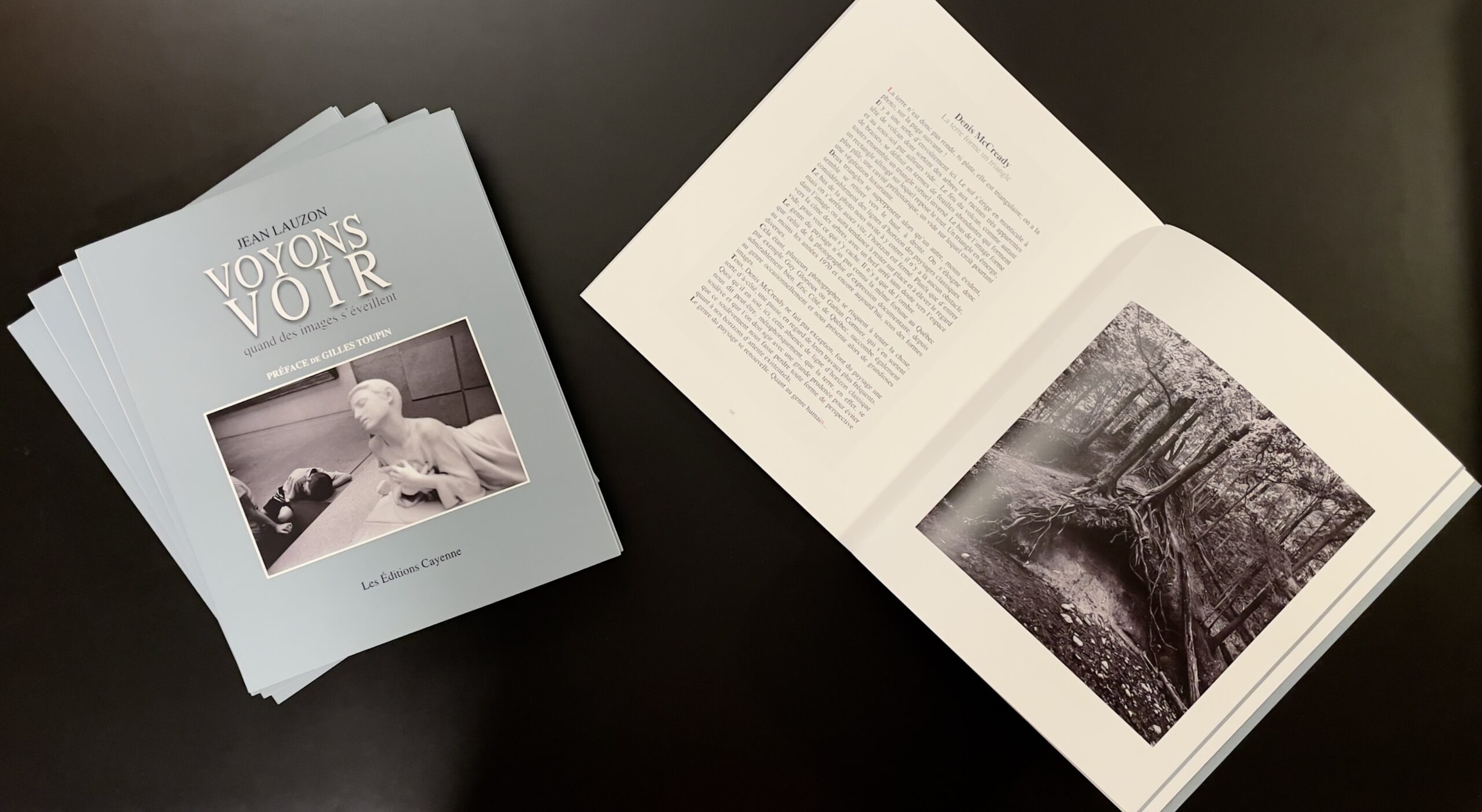
    Description du livre: « Une nouvelle publication du photographe et sémioticien Jean Lauzon vient de paraître aux Éditions Cayenne sous le titre de « Voyons voir – quand des images s’éveillent ». Il regroupe trente photographies d’autant de photographes qui ont accepté de prêter leurs images afin que l’auteur en fasse de brefs commentaires. »

    80 pages, couverture souple

    Préface de Gilles Toupin

    Éditions Cayenne

  • Another Sarajevo – Poetry and Photography Project

    Another Sarajevo – Poetry and Photography Project

    (Bosnian version below)

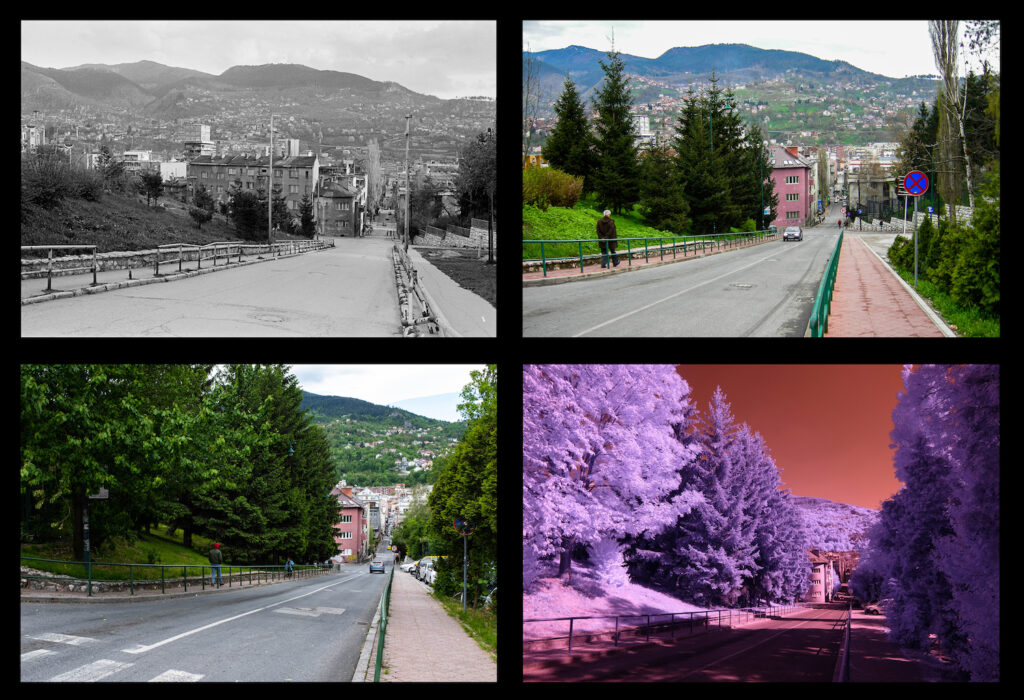
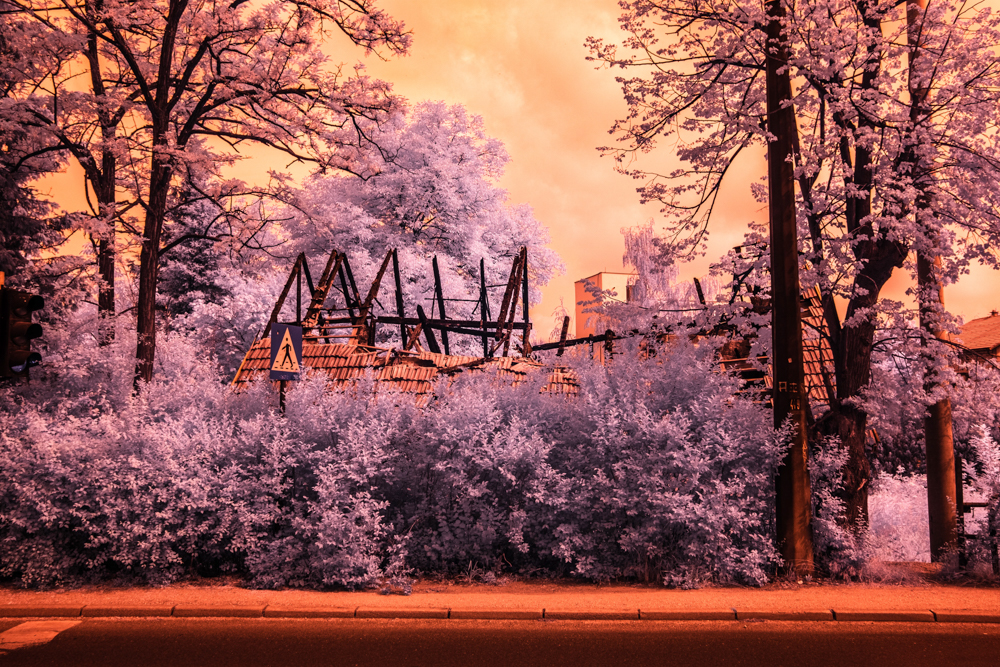
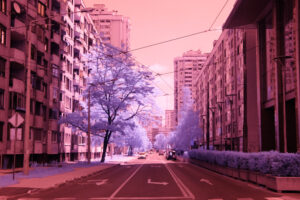
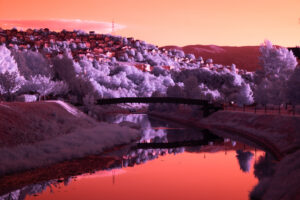
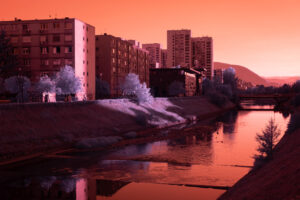
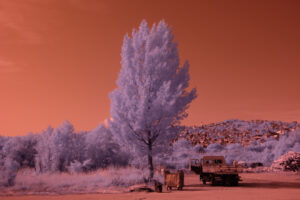
    During the summer of 2022, Denis McCready explored photographing Sarajevo using a digital infrared camera focusing on the extensive reforestation the city had undergone since the end of the war. He soon realized there was another reality hidden from the naked eye, discovering another Sarajevo, strangely beautiful, somewhat mysterious, and ethereal.

    With Goran Vrhunc, a writer friend, they created this project where twelve writers are asked to explore these pictures with a simple question: What would ANOTHER SARAJEVO be like?

    The project will showcase 12 pictures and texts, and will be completed by early September 2024. We are looking for a gallery for an exhibit in Sarajevo between 15 September and 1st November. The project also lends itself to be published as a book.

    Creative Director: Denis McCready
    Literary Director: Goran Vrhunc
    Confirmed writers:
    ·      Asmir Kujović
    ·      Bjanka Alajbegović
    ·      Edin Rikalo
    ·      Ferida Duraković
    ·      Jasmina Hanjalić
    ·      Malik Pašić
    ·      Naida Mujkić
    ·      Sabahudin Hadžialić
    ·      Tugomir Matić
    ·      Zerina Kulović Arnaut
    ·      Goran Vrhunc

    Please contact Denis McCready for further details: denismccready AT gmail.com

    All pictures @ Sarajevo 2022 © Denis McCready – All rights reserved

    Bosnian version (Google Translate)

    (bosanska verzija)

    Sve slike @ Sarajevo 2022 © Denis McCready – Sva prava pridržana

    Tokom ljeta 2022., Denis McCready je istraživao fotografisanje Sarajeva digitalnom infracrvenom kamerom fokusirajući se na opsežno pošumljavanje koje je grad prošao od kraja rata. Ubrzo je shvatio da postoji još jedna stvarnost skrivena golim okom, otkrivši još jedno Sarajevo, neobično lijepo, pomalo misteriozno i ​​eterično.

    Sa Goranom Vrhuncem, prijateljem piscem, kreirali su ovaj projekat u kojem se od dvanaest pisaca traži da istraže ove slike uz jednostavno pitanje: Kako bi bilo DRUGO SARAJEVO?

    Projekat će prikazati 12 slika i tekstova, a bit će završen početkom septembra 2024. Tražimo galeriju za izložbu u Sarajevu od 15. septembra do 1. novembra. Projekat je takođe pogodan za objavljivanje kao knjiga.

    Kreativni direktor: Denis McCready
    Literarni direktor: Goran Vrhunc
    Potvrđeni pisci:
    ·      Asmir Kujović
    ·      Bjanka Alajbegović
    ·      Edin Rikalo
    ·      Ferida Duraković
    ·      Jasmina Hanjalić
    ·      Malik Pašić
    ·      Naida Mujkić
    ·      Sabahudin Hadžialić
    ·      Tugomir Matić
    ·      Zerina Kulović Arnaut
    ·      Goran Vrhunc

    Molimo kontaktirajte Denisa McCreadyja za više detalja: denismccready AT gmail.com

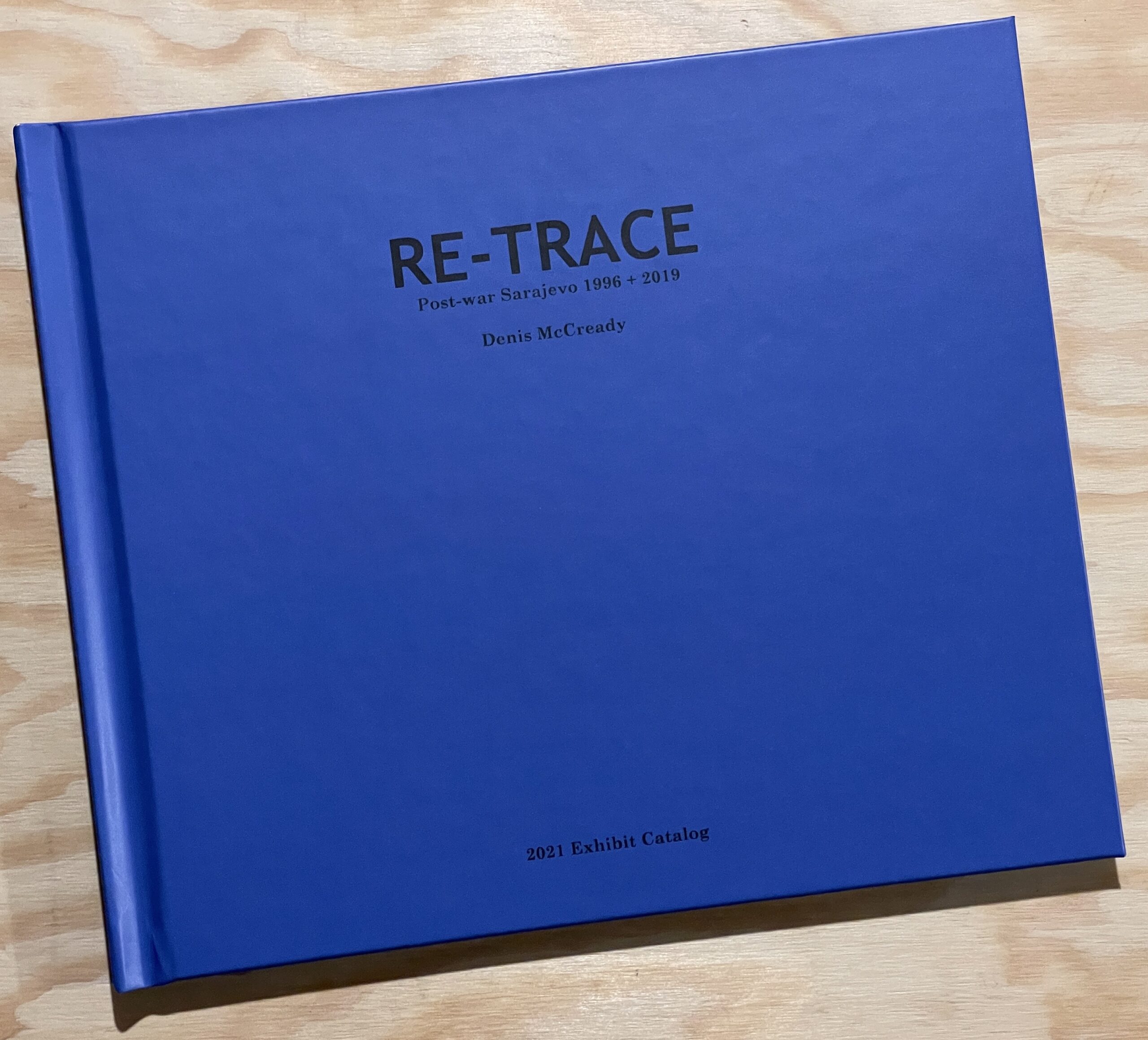
  • RE-TRACE / RE-TRACER 1996 + 2019 (Catalog)

    RE-TRACE / RE-TRACER 1996 + 2019 (Catalog)

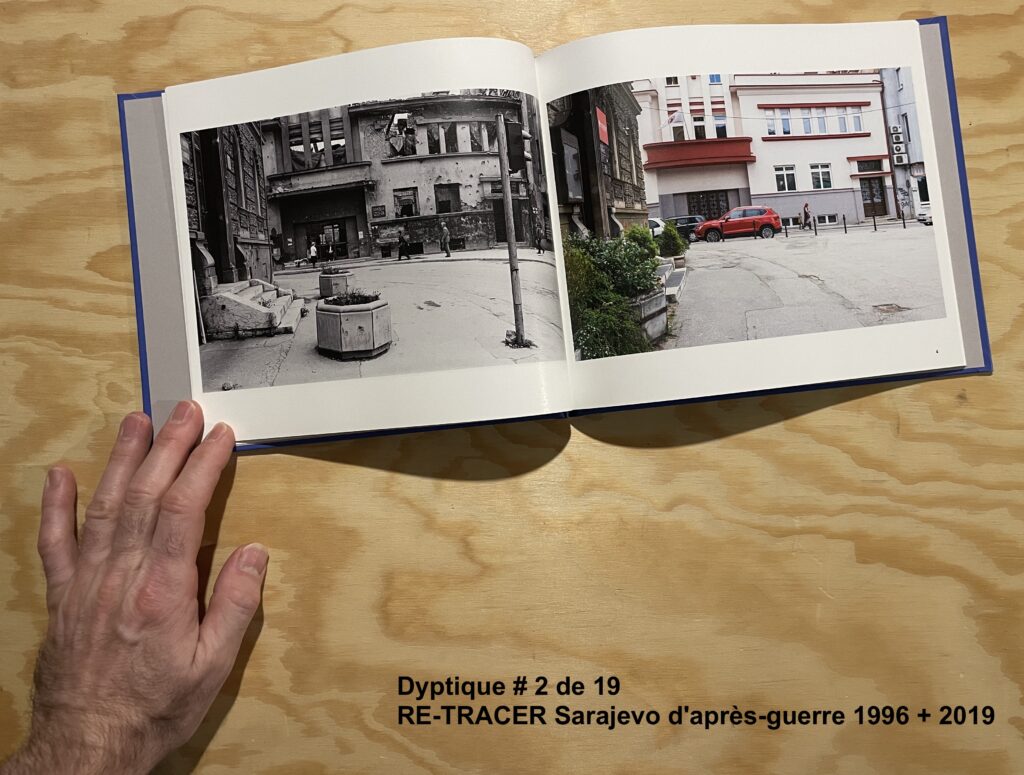
    Catalogue de l’exposition RE-TRACER Sarajevo d’après-guerre 1996 + 2019

    50 pages, couverture rigide, par Denis McCready

    Combien de temps faut-il pour que les traces de la guerre disparaissent? Denis McCready a photographié Sarajevo d’après-guerre en 1996. Au milieu des fleurs printanières, des ruines et des cafés nouvellement rouverts, les gens marchaient partout en toute sécurité dans ce qui ressemblait à un état d’être suspendu. Ils avaient arrêté de mourir, mais n’avaient pas recommencé à vivre.
    – – – – –
    Catalogue trilingue – anglais, français, bosnien – contenant 19 diptyques.

    Couverture rigide, 10 × 8 po, 25 × 20 cm, 50 pages, papier mat Premium.

    Commandez le livre sur le site Blurb.

    Exhibit catalog of RE-TRACE Post-war Sarajevo 1996 + 2019

    50-page Hard Cover, by Denis McCready

    How long does it take for the traces of war to disappear? Denis McCready photographed post-war Sarajevo in 1996. Amidst the spring blossoms, the ruins, and the newly reopened cafés, people walked everywhere safely in what felt like a suspended state of being. They had stopped dying, but they hadn’t started living again.
    – – – – –
    Trilingual catalog – English, French, Bosnian – containing 19 diptychs.

    Hard cover, 10×8 in, 25×20 cm, 50 pages, Premium Matte paper.

    Order the book on the Blurb website.

  • Portraits géomémoriels 1 et 2 – Exposition

    Portraits géomémoriels 1 et 2 – Exposition

    Portraits géomémoriels 1 et 2, photographie, postproduction et impression numérique sur papier mat, 1m. x 1m. 

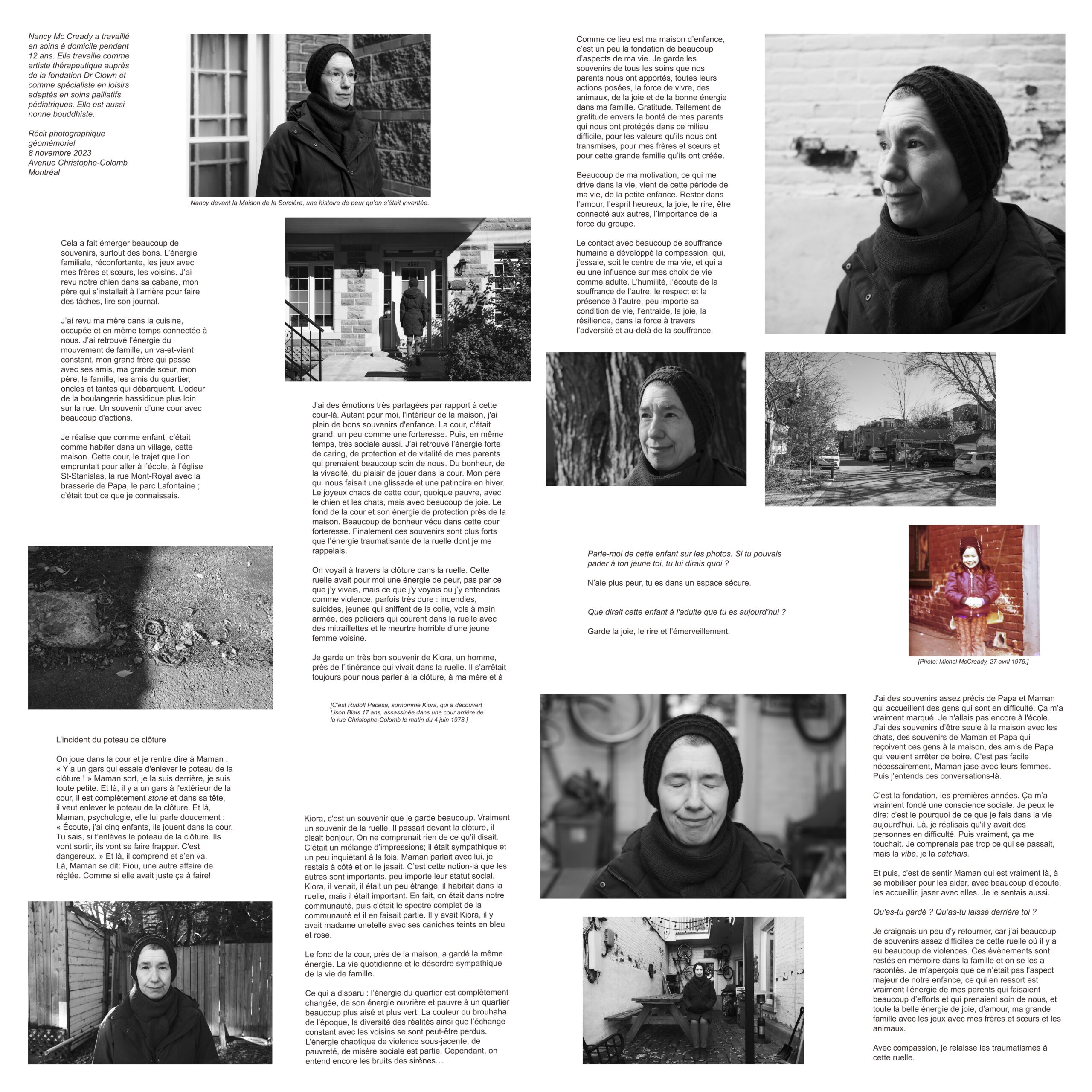
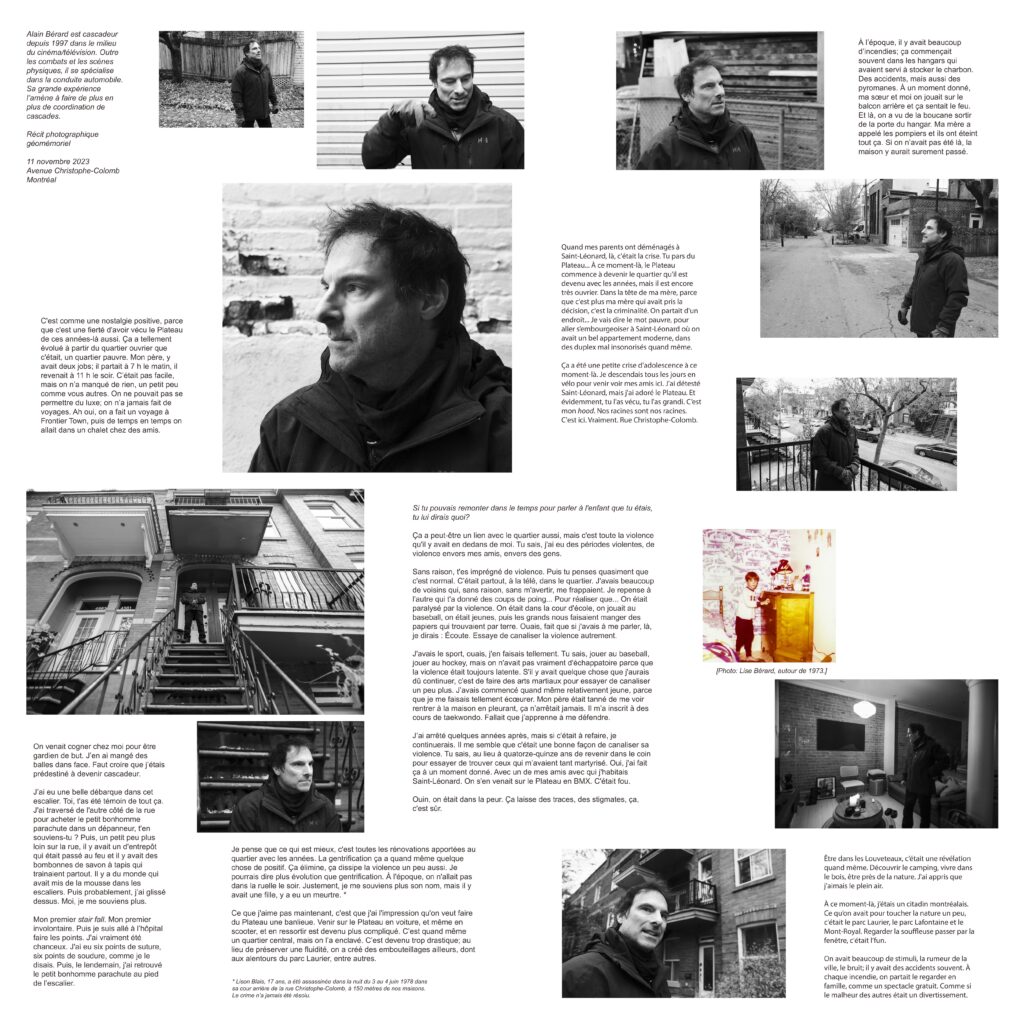
    Dans ce dyptique, Denis McCready explore le rapport affectif et mémoriel avec un lieu significatif à travers une séance de photographie sur les lieux de l’enfance. Sa soeur Nancy s’est rendue dans cette cour arrière, lieux de tous les jeux, et a répondu à ses questions après la séance de portrait. Son meilleur ami d’enfance Alain s’est rendu dans cette même cour arrière et a répondu à ses questions pendant la séance de photo. 

    Portrait géomémoriel 1

    Portrait géomémoriel 2